
The end of art history reflects an arid view of education
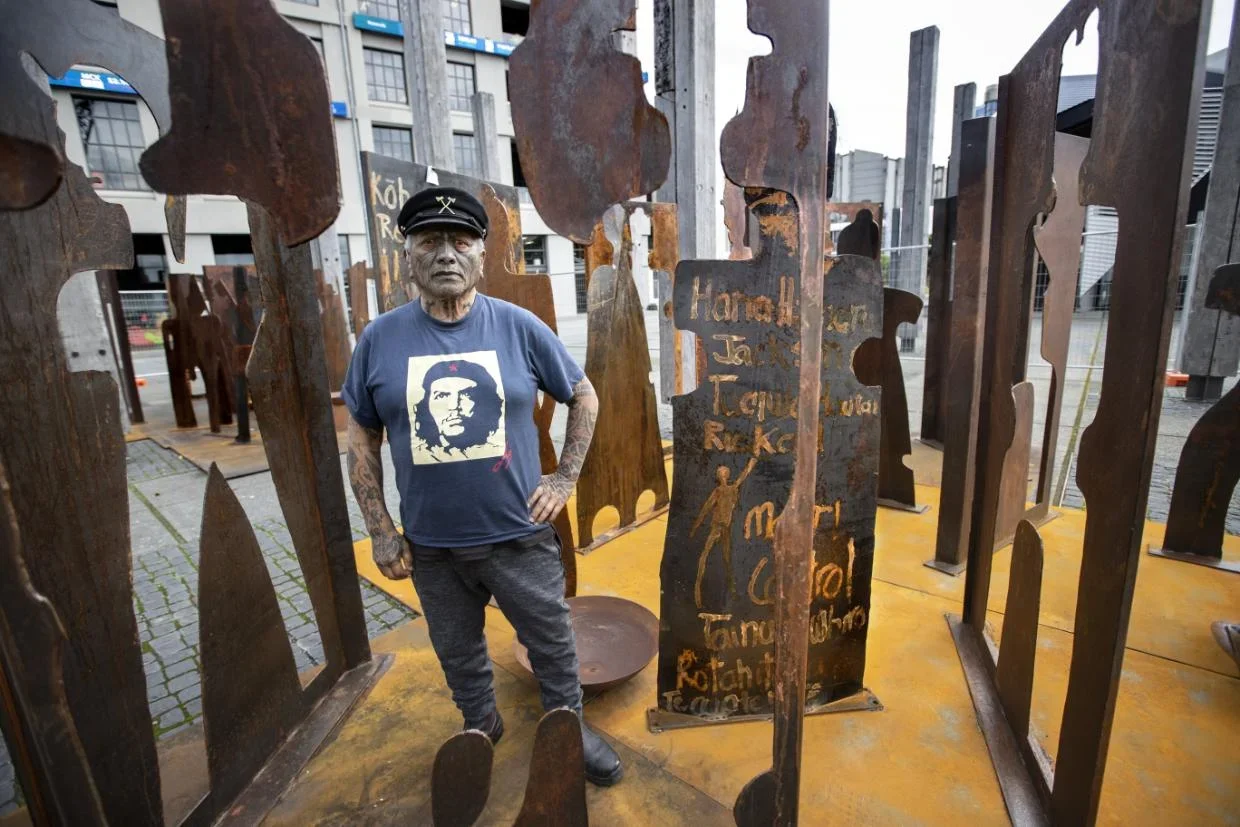
A file photo of artist Tame Iti with his installation Ira Tanata. Iti’s work is one example Paul Moon highlights of art contributing to the distinctiveness of the New Zealand identity.
MONIQUE FORD
OPINION: In his grim novel Hard Times, Charles Dickens introduced the character of the Thomas Gradgrind – a school superintendent who saw education as something that existed solely to serve the economy, and where the approach to the curriculum was reduced to depressing sterility.
“Teach these boys and girls nothing but Facts. Facts alone are wanted in life. Plant nothing else, and root out everything else. You can only form the minds of reasoning animals upon Facts; nothing else will ever be of any service to them.”
This ghost of this dystopian vision is beginning to materialise in our own education system, particularly with the recent announcement that art history is being removed as a subject from secondary schools.
The erasure of art history has been decided on purportedly because of the declining number of students enrolling in the subject. But at the same time, it's hard to avert our gaze from the more obvious explanation: that art history no longer fits with an ideology that cynically sees schools as little more than employee factories – or as it has been cloying depicted by the government, a “sector” which “sets Kiwi kids up for future success”.
What an arid view of the possibilities of education! Art is a crucial part of the architecture of our national identity. It is not an obscure or elitist subject, or some quaint hobby that wandered its way into the curriculum, but a great democratising and invigorating force.
Art is what enriches the theatre of the imagination, and where we get to see dimensions of ourselves that do not exist in any other form. Art, like music, allows us to escape from what William Blake called the “mind-forged manacles” of mundane, everyday existence. It can confront, challenge, threaten, uplift, and console, us, and broaden our imaginative horizon.
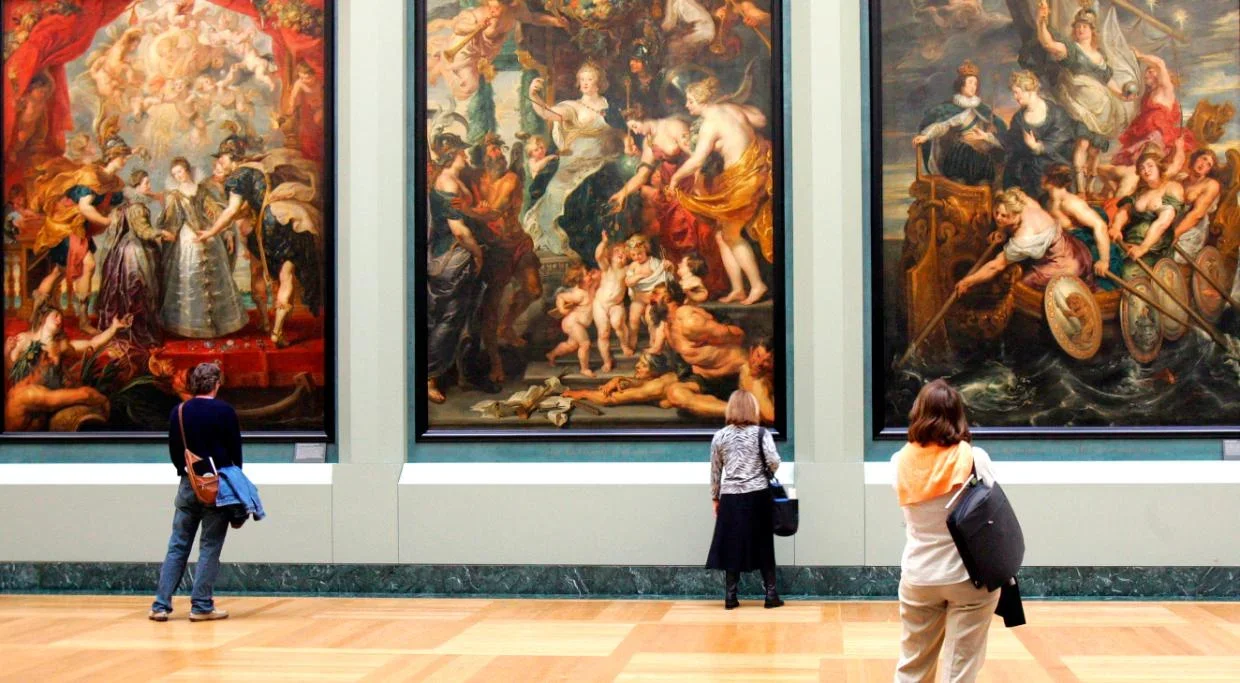
A file photo of visitors viewing works by the French painter Nicolas Poussin at the Louvre in Paris; the sort of image many mistakenly hold of art history, argues Paul Moon.
JACQUES BRINON / AP
And what cultivates the distinctiveness of that identity in New Zealand’s case is the strong pulse of Māori art, which courses through so many aspects of the nation’s visual impression of itself (as challenging as that can sometimes be).
Mention names like Paratene Matchitt, Selwyn Muru, Shane Cotton, Robyn Kahukiwa, or Tame Iti, and striking images appear in the mind’s eye. And if they don’t, that’s an opportunity to explore their works and experience how they distil drama pain, time, pathos, tension, and lucidity, and generally turn up the volume of emotional and intellectual intensity.
New Zealand art is also one of the ways we kick back against the blandness of globalisation – it’s part of what makes us distinctly us. It defies the algorithms of the internet age, and like a pou whenua rammed into the ground, reminds us of the distinct New Zealandness of where we live.
The collective corpus of New Zealand art serves as a national manifesto, from which no-one is excluded.
Removing art history as a subject in schools also exposes a chasm between two distinct ways of seeing the world. One is that of a society fixated on productivity and the pursuit of profit as ends in themselves. The other accepts that such objectives are not mutually exclusive with a desire to understand, explore, and appreciate art, and that at its most effective, art can offer the sort of personal epiphany that no amount of profit can even compensate for.
But then imagine successive generations of young New Zealanders denied the option to study all this at school, and being left to rely on their own curiosity and inclinations if they are to delve into this world.
Contrary to some popular misconceptions, art history has never been about preparing students to shuffle past ornately-framed minor masters dangling from gallery walls. Instead, it opens their minds to a world beyond the gloom of late-stage consumer capitalism, and nourishes a much more diverse and – it has to be said – interesting society.
Surely Erica Stanford, the minister responsible for the expulsion of art history as a school subject, can consider its return. After all, if the subject disappears from school, who really benefits?
Paul Moon / The Post
